


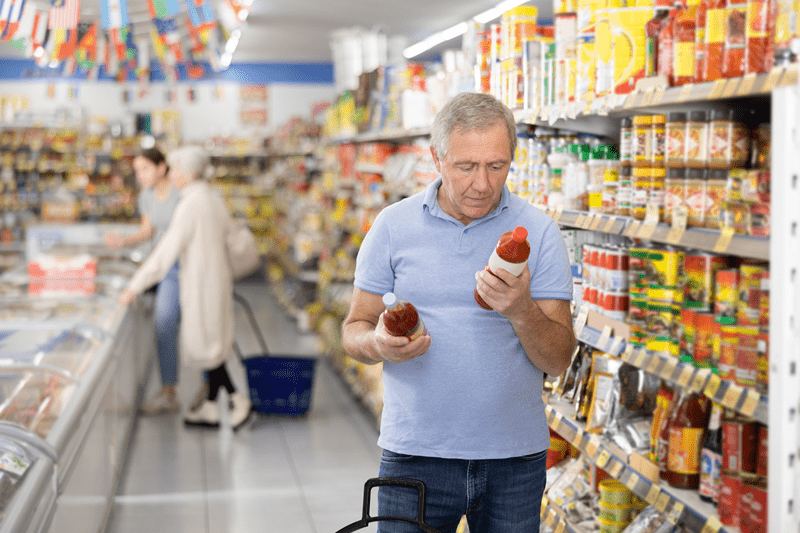
Walk into any supermarket in the United States, and you are surrounded by choices: snacks, cereals, frozen meals, sauces, beverages, and many more boasting some type of promise: low-fat, organic, high protein, reduced sugar, or heart-healthy. So how do you know what is actually good for you? It begins with reading nutrition labels.
Whether one desires to watch their weight, cut down on sugar intake, monitor the amount of sodium consumed, or simply make healthier choices generally, the ability to read a nutrition label puts you in the know about what's really in your food. For most people, though, all that small print, percentages, and unfamiliar terminology can overwhelm them. This is where a straightforward guide to nutrition labels becomes incredibly useful.
Below, the basic concept will be discussed regarding understanding food labels, including some tips on how to correctly read food label basics, so that one can confidently make choices supportive of health. Consider it to be an in-depth food labels guide helping with decoding nutrition facts like a pro.
For decades, Americans have been encouraged to eat healthier-but processed foods, oversized portions, and confusing marketing claims often get in the way. Which is precisely why reading nutrition labels is such an important thing. Labels give you objective information, not marketing spin.
Here's what learning how to read labels helps you do:
Even when you know the basics behind food labels inside and out, foods labeled "healthy" can still be too high in calories, sodium, or carbohydrates. And that is where decoding nutrition facts and understanding food labels becomes a powerful daily skill.
Serving size is the first line on a nutrition label, and that is where one should always begin. Most people skip over it, yet it is the key to reading nutrition labels correctly.
For example, it may say that potato chips have 150 calories, but the serving size is small; one serving size is roughly the size of 12 chips. You would actually consume 450 calories or more if you had the whole bag.
Here's why serving size matters in a nutrition label guide.
If you want an accurate picture of your food, portion awareness is the basis of any kind of understanding of food labels.
Calories are a measure of the amount of energy you get from a serving of food. This number would typically be the first thing most Americans, struggling with weight management, would check.
But reading nutrition labels for calories is more than just the number. You should also pay attention to:
The product may be low in calories but still be very high in sugar. On the other hand, another product may have a high calorie count but still be very high in nutritional value, such as nuts or avocados. This is why the basics of the food label look at calories along with the other sections.
As you continue understanding food labels, pay close attention to the nutrients most Americans over-consume.
Common sources include:
Now, the label has separated out "Total Sugars" from Added Sugars, thereby making this attribute more traceable for the consumer. Most diets try to limit added sugar consumption as much as possible.
This is the area where the fundamentals of food labeling alone can really drastically alter your choices.
While some parts of the label focus on what to limit, other parts help you get enough of the nutrients you need.
Look for:
According to the guide to nutrition labels, fiber helps with digestion, heart health, and regulates levels of blood sugar. It is found in whole grains, legumes, vegetables, nuts, and seeds. With practice, you will learn to read labels for fibre, just as you do for calories or sugar.
One of the best tools to help you decipher a nutrition label is the %DV because it helps you determine whether the food is high or low in a certain nutrient. It is calculated based on a 2,000-calorie diet.
One simple rule that is taught in many nutrition label guide resources is:
This greatly simplifies the understanding of labels on food.
Examples include:
Just remember, the %DV does not account for your personal needs. But it is a good starting point for general purchases.
Food packaging in the U.S. very often uses catch-all picturesque terms, and that is why deciphering nutrition facts becomes critical before buying into a claim such as: “Natural “Low-fat” “Organic” “Sugar-free” “Light” High-protein For example, a "low-fat" product may still be high in added sugar, or an "organic" snack may still be high in calories and salt. This is where reading nutrition labels overrides marketing tricks.
Here are simple ways to use your nutrition label guide in daily grocery shopping.
Cereals for breakfast, bread, snacks, meals, condiments, and beverages play a major role in daily nutrition. Balance Use an understanding of food labels to choose foods lower in unhealthy ingredients and higher in beneficial nutrients like fiber and protein.
At first, reading nutrition labels may feel overwhelming. But with consistent practice, it becomes second nature. You will immediately know how to recognize misleading packaging, find healthier options, and make wiser decisions without having to spend any more time in the store.
Among these endless choices in the food environment, reading nutrition labels is one of the most powerful tools one has. One will know how to choose foods that truly match their health goals by reading serving sizes, calories, nutrients, ingredient lists, and the %DV on the label. With strong food label basics, anyone can be empowered to confidently decode nutrition facts and make sense of food labels with ease.
A reliable nutrition label guide helps take control of one's eating habits, one label at a time. Be it managing a health condition, eating cleaner, or simply wanting to know what's in one's food, learning label reading brings lifelong skills toward better health.
This content was created by AI